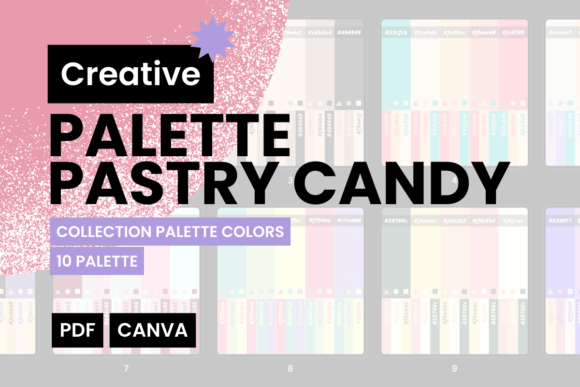
PALETTE PASTRY: 10 Color Combinations for Sweet Design
A Curated Collection of Ready-to-Use Color Palettes
Color selection is one of the most time-consuming parts of any design project. You might spend hours tweaking hues, adjusting saturation, and testing combinations only to end up with a palette that feels slightly off. PALETTE PASTRY - 10 Combinations Colors eliminates that frustration by delivering ten professionally curated color palettes inspired by candy and pastry aesthetics. Each combination has been tested for visual harmony, contrast, and versatility across different applications.
The collection draws from confectionery tones: think soft pinks reminiscent of strawberry macarons, warm caramels that evoke toffee, cool mints that recall buttercream frosting, and rich chocolates that add depth and sophistication. These are not random pastels thrown together. Every palette balances warm and cool tones, light and dark values, and neutral anchors with vibrant accents. The result is a set of color combinations that feel both playful and polished.
What You Receive After Purchase
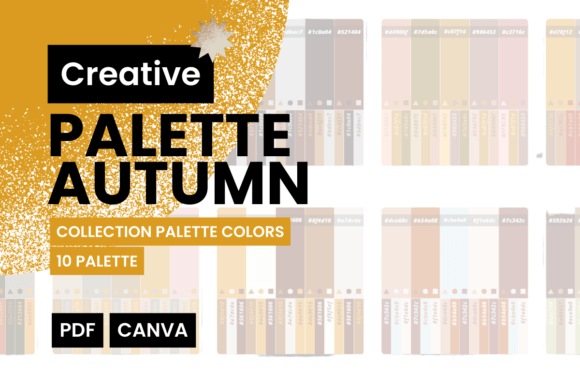
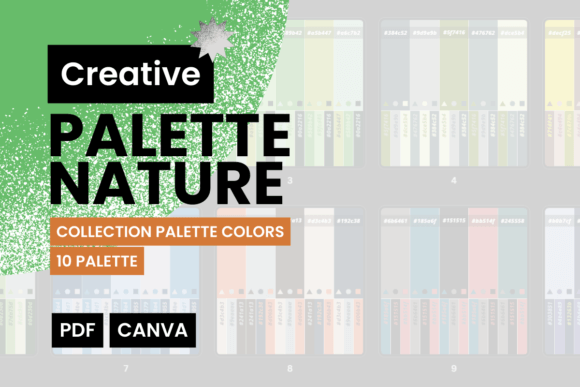
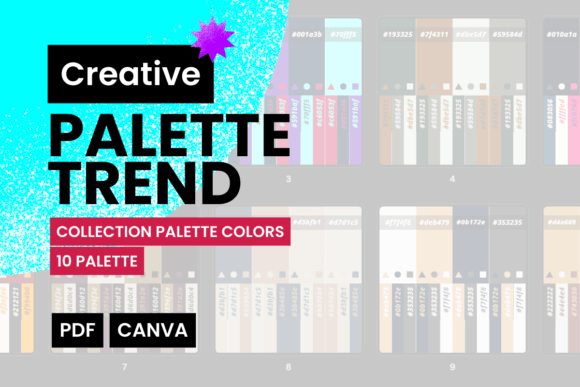
The PALETTE PASTRY - 10 Combinations Colors package includes three deliverables designed for immediate use. First, a PDF document displays all ten color palettes with their hex codes clearly labeled. You can print this reference sheet and keep it beside your workspace or save it to your device for quick access during projects. Second, a direct link gives you editable access to the palettes inside Canva. This means you can import the colors into your Canva projects without manually entering codes. Third, a set of instructions walks you through accessing and using the colors across different platforms and software.
This structure matters because different creators work in different environments. Some prefer Adobe Illustrator or Photoshop. Others build everything in Canva. Some use Figma or Affinity Designer. The hex codes work universally across all these platforms, while the Canva link serves those who rely on that specific tool. The instructions bridge the gap for anyone unfamiliar with importing custom color palettes.
Where These Palettes Shine
The candy and pastry-inspired tones in PALETTE PASTRY - 10 Combinations Colors work exceptionally well for specific industries and project types. Bakeries, cafés, dessert shops, and confectionery brands find natural alignment with these palettes. But the applications extend far beyond food-related projects.
Beauty brands, skincare lines, and cosmetics companies often gravitate toward these soft, inviting tones. Wedding planners, event designers, and stationery creators use similar palettes for invitations, save-the-dates, and day-of materials. Children's brands, toy packaging, and educational materials benefit from the playful yet refined quality these combinations offer. Lifestyle bloggers, wellness coaches, and self-care product lines frequently choose palettes in this range to communicate warmth and approachability.
Even corporate projects occasionally need a softer touch. A healthcare startup might use mint and cream tones to feel approachable without losing credibility. A fintech app targeting young adults could incorporate coral and blush accents to differentiate itself from the typical blue-and-gray financial aesthetic. The key is understanding context and audience expectations.
Practical Application Across Design Projects
When working with these palettes, consider how each color serves a specific function within your design hierarchy. Typically, one color becomes your primary brand color. Another serves as a secondary accent. A third handles backgrounds or large surface areas. The remaining tones fill supporting roles: text highlights, button colors, border treatments, or illustration fills.
For logo design, limit yourself to two or three colors from a single palette. Logos need to reproduce well in single-color versions, so test any palette by converting your logo to grayscale. If the shapes and forms remain distinct without color, you have a solid foundation. PALETTE PASTRY - 10 Combinations Colors includes enough variety that you can find combinations with sufficient contrast for this purpose.
In packaging design, these palettes create shelf presence. Soft pinks and golds communicate premium confectionery. Mint and chocolate tones suggest artisanal quality. Coral and cream combinations feel fresh and contemporary. The palettes work particularly well when paired with clean sans serif typography or elegant serif typefaces, depending on the brand personality you want to project.
For social media graphics, consistency matters more than individual post perfection. Choose one palette from the collection and apply it across all your content for at least a month. This creates visual cohesion in your grid, makes your content instantly recognizable, and builds brand recall. The Canva link makes this especially convenient since most social media creators build their graphics in that platform.
Color Psychology and Brand Perception
Colors communicate before words do. The pastel and confectionery tones in PALETTE PASTRY - 10 Combinations Colors tend to evoke feelings of comfort, sweetness, nostalgia, and care. Soft pinks suggest warmth and tenderness. Lavender tones communicate creativity and calm. Peach and coral hues feel energetic yet approachable. Cream and vanilla tones provide a neutral foundation that lets accent colors take center stage without overwhelming the viewer.
Understanding these associations helps you select the right palette for your specific brand or project. A meditation app might choose lavender and soft gray. A children's clothing brand could lean into peach and mint. A luxury chocolate company might prefer deep cocoa paired with gold and cream. The psychological weight of each color influences how your audience perceives your brand before they read a single word of copy.
Getting Started with Your Purchase
After downloading PALETTE PASTRY - 10 Combinations Colors, start by reviewing all ten palettes in the PDF. Identify two or three combinations that resonate with your current project or brand direction. Import the hex codes into your design software or use the Canva link to access them directly. Build a simple mood board using the selected palette to see how the colors interact with your existing brand assets, photography style, or illustration approach.
Test the palettes in context rather than in isolation. Place them next to your product photos. Apply them to a sample social media post. Mock up a business card or website header. Colors behave differently depending on surrounding elements, screen settings, and print materials. What looks perfect on your monitor might shift slightly on a phone screen or when printed on uncoated paper stock.
The beauty of having ten pre-built combinations is the flexibility to experiment without starting from scratch. If one palette does not quite fit, another from the same collection likely will. Each combination shares a cohesive aesthetic DNA while offering distinct personality and mood. This gives you creative range within a unified visual family, which is exactly what most branding and design projects need.